

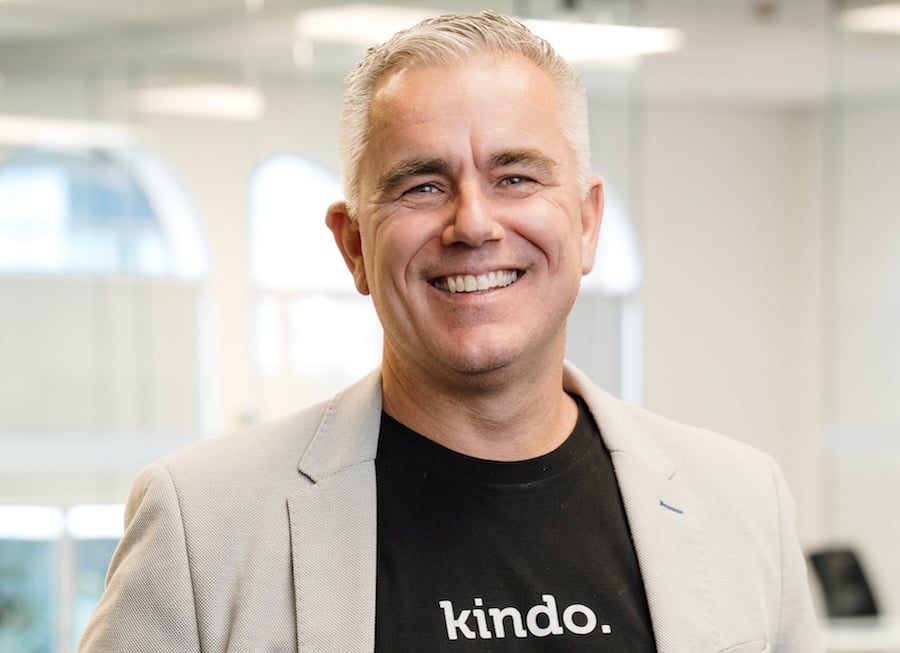
NZ-built school payments platform Kindo is an example of innovation in the education sector. The platform began as a solution to make nutritious school lunches easier for families and has since evolved into a broader payments and administration system spanning donations, camps, sports, uniforms and fundraising. It is now used by a large number of schools nationwide. CEO Chris Maclean shares insights into his leadership of a product that sits at the intersection of education, fintech and everyday family life.
What does a typical day look like for you as the CEO of Kindo?
I start the day early, and go to the gym to ensure I’m arriving in a good headspace and ready to go. Every morning, the leadership team has a 15-minute stand-up meeting to connect, celebrate small wins from the previous day, and highlight focus areas for the day ahead. It’s basically a daily calibration. This is probably our most important rhythm, as it helps avoid the miscommunication and small mishaps that can come from moving quickly without staying closely connected.
I try to do my deep thinking in the mornings and reserve the middle of the day for meetings – either one-on-one sessions with my team or discussions around important projects. My favourite days are always the ones where I get to spend time with customers in schools. I love the school environment – it’s full of energy from the students, and the staff are often incredible people, deeply passionate about shaping the next generation.
What inspired you to take on the role – was it from a parent’s perspective or through experience in the education sector?
Both, but the parent lens came first. When you see your own kids navigating school life, you notice how much admin sits on top of learning – lunches, trips, donations, uniforms, event forms. Then you talk to school office staff and realise they’re drowning in the same admin from the other side.
Building Kindo was about sitting in the middle of that and making it work for everyone. It’s a complex four-sided marketplace: students who benefit from the services, parents and caregivers who make the payments, schools who administer and oversee them and vendors – whether external providers like lunch suppliers or the schools themselves.
What problem were schools struggling with most before Kindo?
The two key challenges we solve for schools are optimising parent contributions, which are critical to school funding, and managing the significant administrative workload related to the registration and payment of school-related products and services.
In terms of optimising parent contributions, we make it easier for caregivers to understand what needs to be paid and to complete those payments. It’s a duck feet kind of thing – looks easy on the surface, but there’s a lot going on underneath. When we get it right, parents tend to contribute more.
On the administrative side, if you imagine a school with a thousand students, each generating perhaps 15 or more payment interactions with parents or caregivers every year, the workload quickly adds up. Large schools end up managing hundreds of small payments that need to be reconciled across their bank accounts, so Kindo’s unified platform provides massive relief.
How did you take Kindo from a simple tool to something schools rely on daily?
By far the most important thing is staying connected to our customers. We spend a lot of time listening across every channel of feedback. Our sales, customer success, and support teams are all trained to identify pain points, and our product team then synthesises those insights into the product roadmap, working closely with customers to get it right.
We’ve found we don’t need to be particularly inventive – we simply need to listen carefully to the problems that need solving and focus our creativity on solving them. We’ve been doing this for 15 years now, and there’s no sign of running out of things to do yet!
What’s been the hardest part of scaling in the education sector?
Decision-making can be more conservative than in other sectors. Schools are complex organisations with many stakeholders and are often resource-constrained, so there’s little room for mistakes. That said, once you’ve done the hard work of establishing and maintaining trust, schools tend to be very effective at sharing what’s working with one another.
What advice do you have for Kiwi organisations digitising payments and operations?
Hopefully there aren’t too many organisations still questioning the benefits of digital payments, but there is an extraordinary opportunity emerging in operational efficiency.
I believe artificial intelligence will impact every industry, ranking alongside the arrival of electricity, cars and the internet in terms of transformational change. My advice to businesses is to understand where AI can help or harm their operations and to prepare for it without delay.