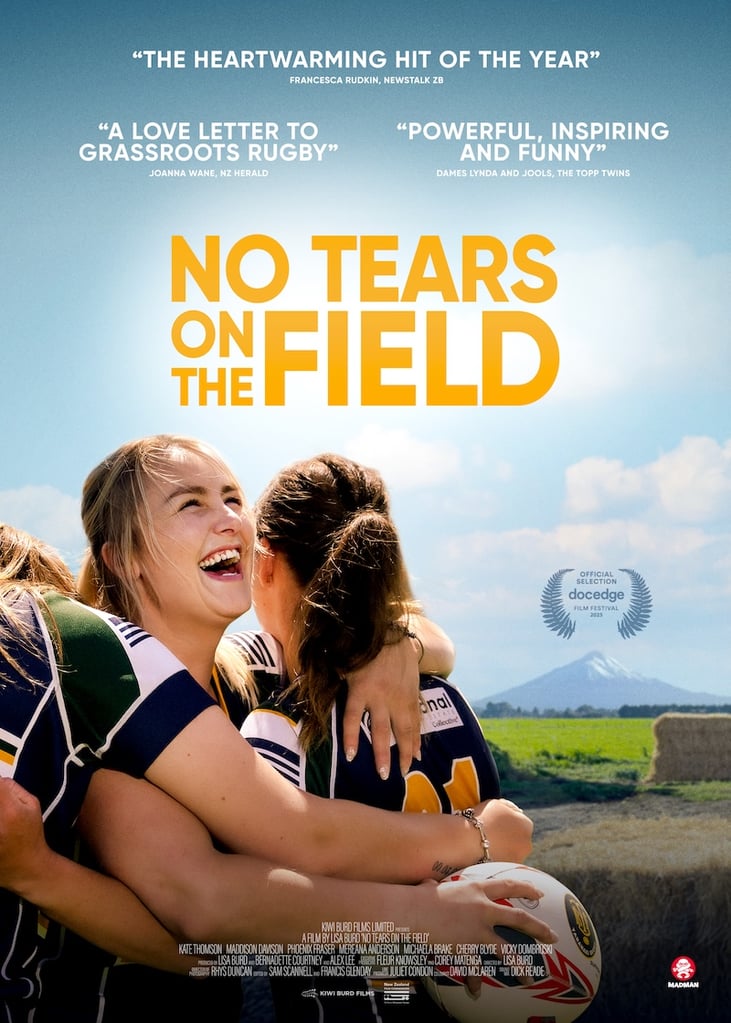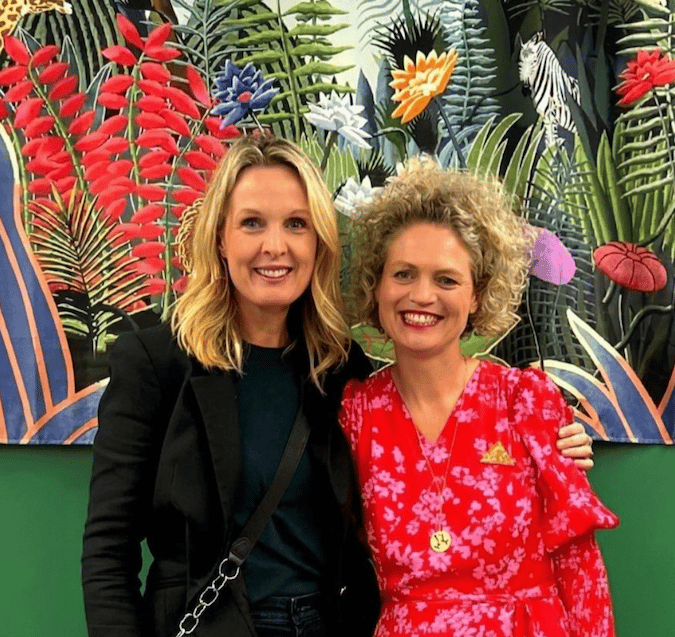

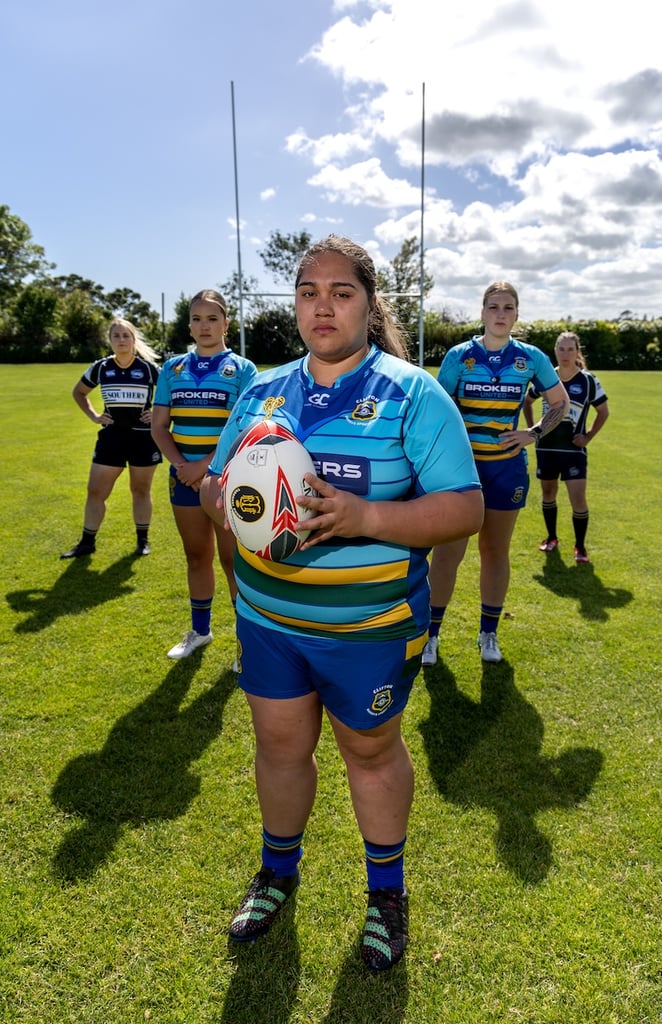
Above: No Tears on the Field follows Taranaki teams Southern and Clifton across an entire season. The documentary was brought to life by director Lisa Burd.
Director Lisa Burd doesn’t want people to think her latest documentary, No Tears on the Field, is just about rugby.
While it follows women playing grassroots rugby in Taranaki, the sport is just “the vehicle” to tell their story, says Burd.
“It’s all about getting to that rugby game rather than watching the game. It’s about what they have to sacrifice to even get there, the injuries, the camaraderie they get from their mates.”
After four years of filming and editing, No Tears on the Field is hitting cinemas in Aotearoa on March 19. In 2025, it premiered at the Doc Edge Festival.
The documentary follows Southern Rugby Club’s Kate Thomson and Clifton Rugby Club’s Mereana Anderson, Maddison Davison and Phoenix Fraser, among others.
It also features Black Fern and two-time Olympic medallist Michaela Brake (nee Blyde), her mother, rugby administrator and former player Cherry Blyde and Vicky Dombroski, the first woman to coach the Black Ferns. All three women are from Taranaki.
Rite of passage
For Burd, growing up in Taranaki in 1970s, watching the rugby on TV with the family was just what you did.
“We were so immersed in that little TV. There was no talking. It was just the quintessial Kiwi thing to do.”
She played rugby with her older brothers, making up the numbers when they were short. But when the team quota was finally met, there was no room for her any more.
Burd forgot all about rugby until she returned home to Taranaki following the Covid-19 pandemic. She had a job as a visual journalist with Stuff.
“We filmed these girls playing rugby and I thought, ‘Wait, what? That rugby thing still exists?’” she laughs.
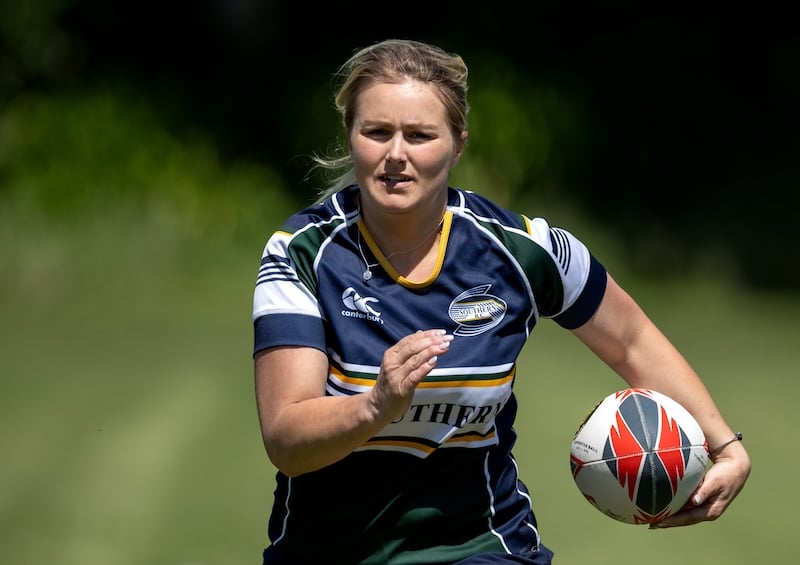
“I turned up at this real rural rugby ground… and I saw this amazing-looking blonde woman with makeup on running straight towards the camera. I just went click, click, click. ‘Jeepers creepers, she’s going to run me over, but what a shot’.”
It was at this moment that Burd realised she wanted to know more about these players.

Grateful for grassroots
Southern player and dairy farmer Kate Thomson still can’t get over having her face on the promotional posters. She has been overwhelmed with the support that has come from her community, both in Taranaki and her former home in the Hawke’s Bay.
Clifton player and primary school teacher Mereana Anderson says an emotional moment was when her colleagues attended a local screening of the film.
“Someone said a beautiful speech and I really felt loved and supported by my colleagues,” she says.
“Hearing a lot of feedback, everyone is like: ‘Whoa, this is something different’. It’s been awesome to highlight some of the challenges a lot of the ladies go through.”
Thomson’s rugby journey began playing club rugby as a child in Takapau, a small town in the Hawke’s Bay. “Cold frosty mornings, barefoot rugby, your feet are freezing cold,” she laughs.
For Anderson, it started at age 13 while living in Tokoroa. As a teenager, she played both seven and fifteen-a-side rugby in New Plymouth.
They are both grateful for the light this film shines on grassroots teams.
“It’s a natural path on the ladder if you want to become a Black Fern or you want to get into Super Rugby Aupiki,” says Thomson. “You’ve got to start somewhere and it has to be a continuous ladder all the way through.”
She’s now played 62 games for Southern Rugby Club since joining in 2018. Her sights are firmly set on getting to 100.
Community power
“There’s nothing quite like getting your hundreds of hours of footage down to 90 minutes. It’s always stressful, but just finally making it all connect,” says Burd.
She adds she’s loving the feedback received so far. At a recent screening, an older gentleman told her: “It’s been 55 years since I’ve been to the movies, it was a ripper and I didn’t sleep through this one.”
“And I thought ‘Wow’. That just made my day,” says Burd.
Other women have said it’s inspired them to get back into sport, whether that’s as a coach or a player.
Most importantly, the film has shown the power of community, she adds.
“I think community is way more important now that it’s ever been. If we can capture that and show people out there in the big wide world how important community and family is.”
Anderson says this is one of the reasons she loves rugby: the ability to socialise and create meaningful friendships.
For both her and Thomson, rugby also provides them with an outlet to express their emotions and their physicalty.
“And then what you take on the field, you leave out there, you don’t bring it back inside,” says Anderson.
Lessons in resilience
It’s also taught them how to be resilient, both in games and in life.
“It teaches you to get up and move on. There’s no point in dwelling if you’ve made a mistake on the field. And when you’re out and it’s absolutely freezing cold – we’ve played during hail, we’ve played during basically a near bloody flood on the ground,” says Thomson.
“If not for the girls pushing you along, they give you that boost of ‘I can do this, get up’. You’ve got to work for them so we can get that outcome.”
Speaking of resilience, perhaps one of the most confronting scenes in the film is when Thomson deals with an injured finger.
“What you don’t see in there is my mum saying, ‘Oh your boss isn’t going to like that.’ Instead of ‘Oh, are you okay?’. Because all of my injuries seem to fall just before calving, which is the worst time possible to be getting any injury,” laughs Thomson.
That tough love approach from her family has helped shape her, she adds.
In fact, it was her mother’s words that named the film: “She’s always said, ‘No crying on the field’. My mentality is just that I want to get up and play and I’ve got so much I want to prove and show.”
Real talk
Rugby has always been about more than winning or losing – the season that Burd filmed was one of the worst for Southern, who lost the final to their Clifton rivals, says Thomson.
“You’re losing, but you still show up. You’re showing up for your province, for that jersey, for your family. It’s as simple as that, you play to the mana that you put into it.”
Burd, Thomson and Anderson want people know what women go through in life as they balance work, school and family while also playing sport.
Burd says the women she filmed were all time poor, so many of the interviews were conducted while they made dinner or milked the cows: “It meant you had to shoot from the hip and go hard – I had to fit in with their schedule and that naturalness comes across, I think.”
Anderson adds: “I really hope that if there’s men that are coaching women, they’ll see this and see how women work and how to treat them in this space,” says Anderson.